REALI Pilot
Our first pilot · Kabondo, Rachuonyo East
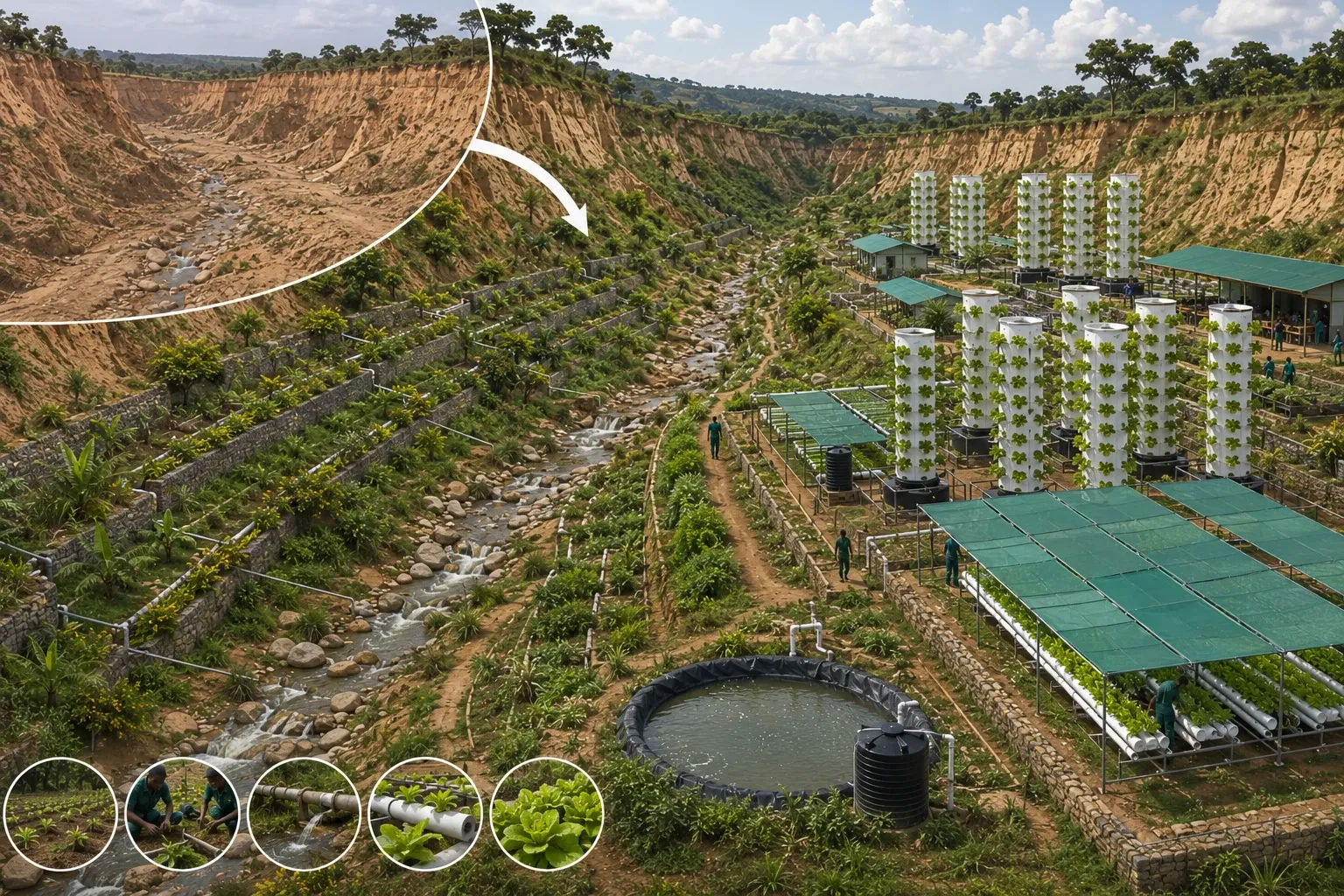
A damaged mine site can remain a wound on the land, and a risk to the community. Or the community can turn it into a farm.

The Resilient Ecosystems and Agricultural Livelihoods Initiative (REALI) is designed for 10 community groups and 10 demonstration farm sites, over a six-month proof of concept. We are raising funds to launch.
What happened to this land
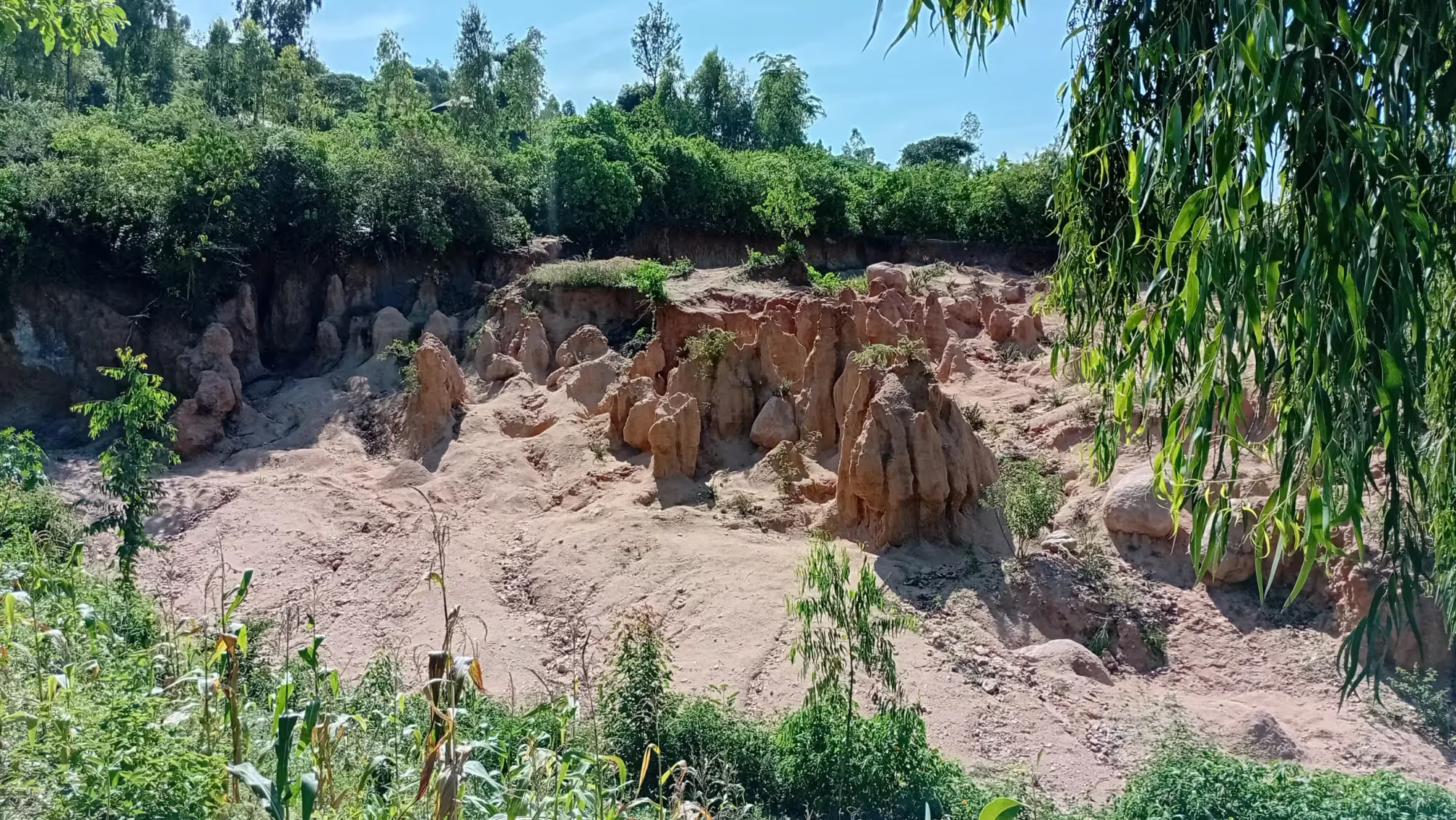
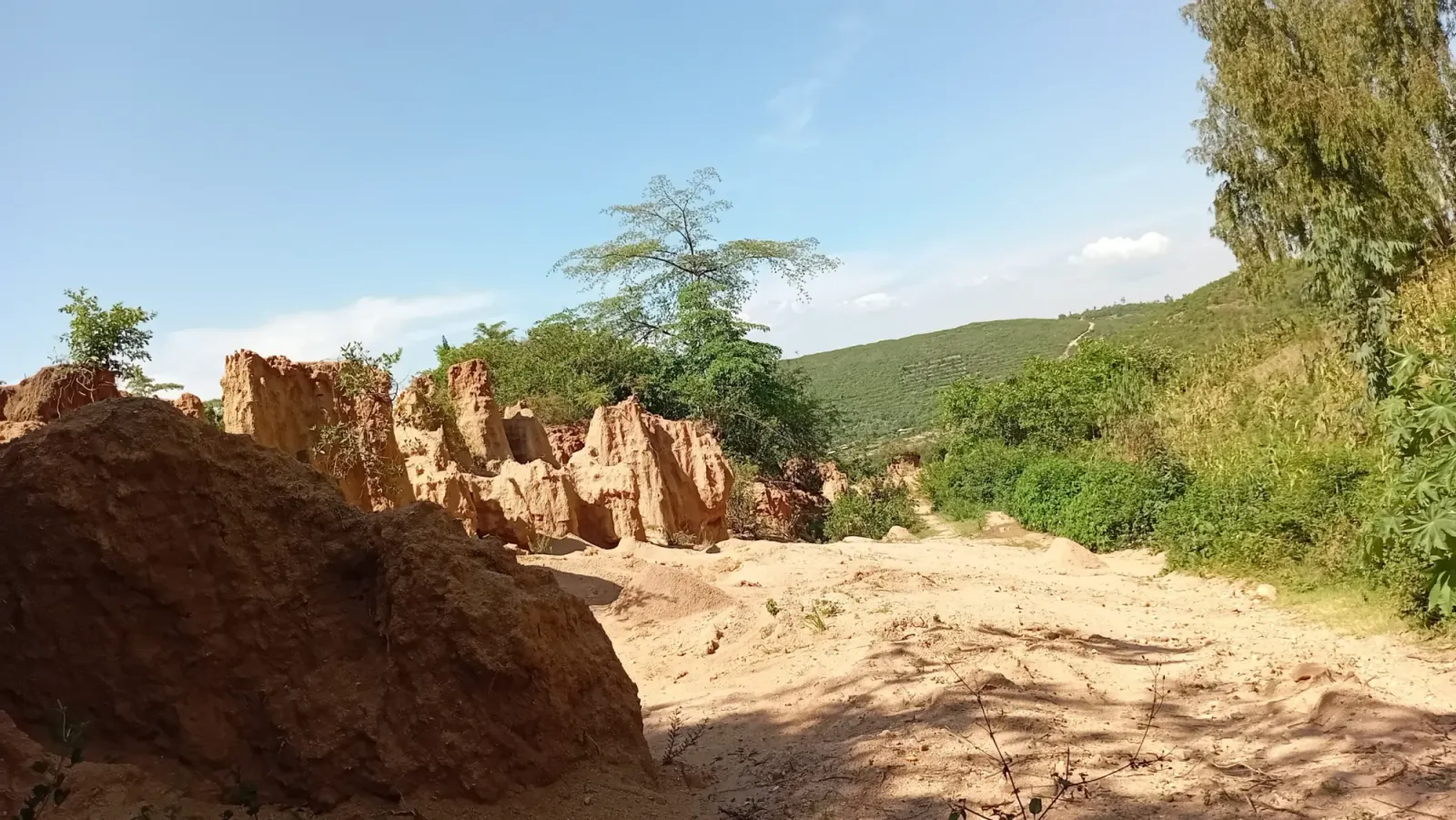
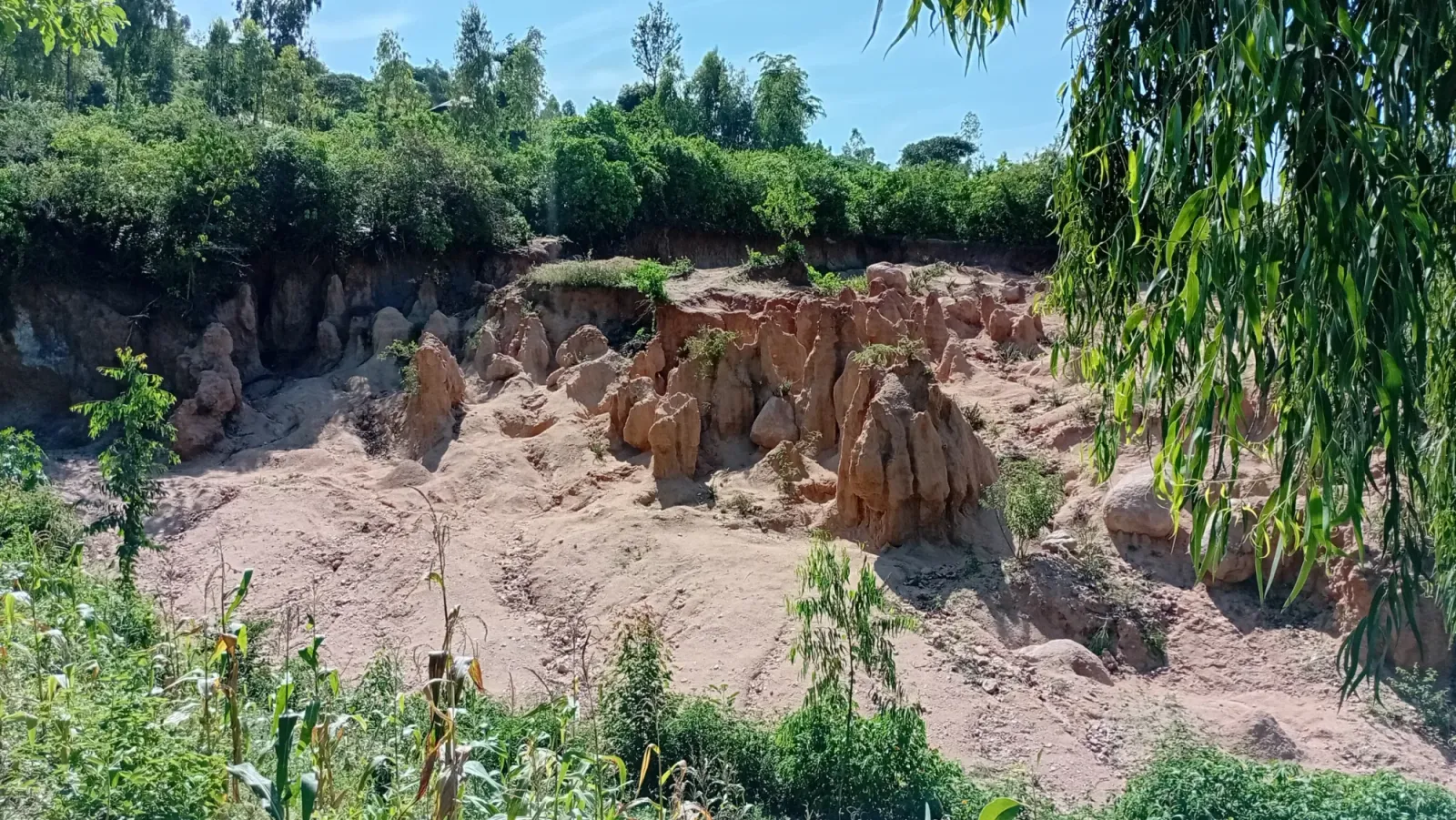
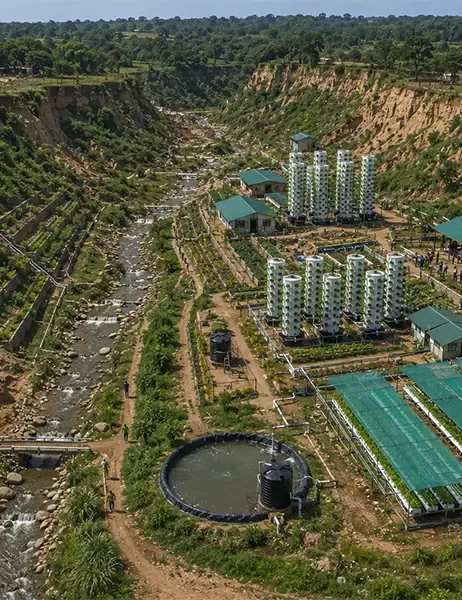
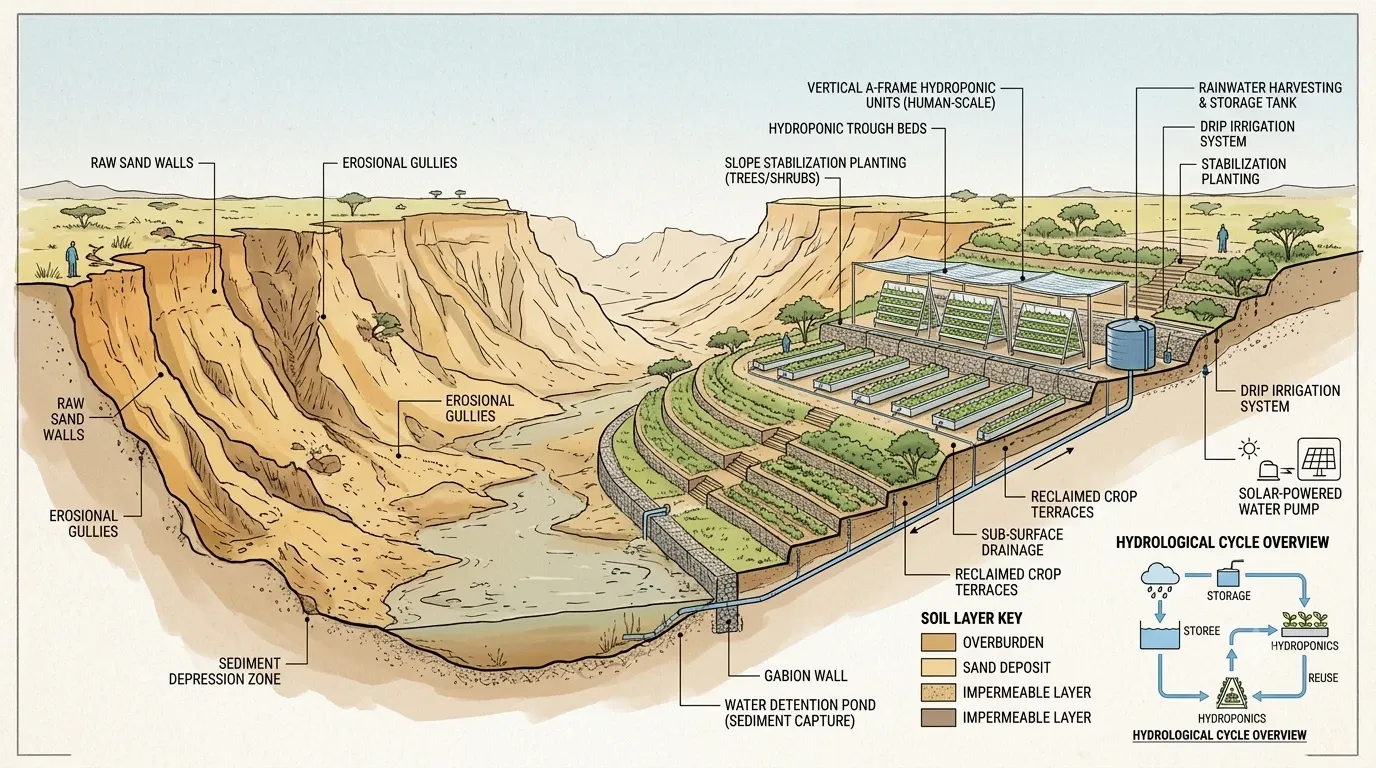
Sand mining here is not done in deep shafts. It runs horizontally along valley floors, so the trees and vegetation come out first, then the sand underneath. What is left behind are wide gullies, not isolated pits: bare eroded walls, loose sand floors, and land that no longer holds water or supports crops the way it used to.
None of this was licensed. Between 2019 and 2023, Rachuonyo East had no licensed sand-harvesting sites, yet uncontrolled sand harvesting was one of the most reported environmental crimes in Homa Bay County (Homa Bay County Statistical Abstract, 2024). Families in this region depend on agriculture, and shrinking, damaged farmland means fewer ways to grow food and make a living.
Why vertical and hydroponic farming
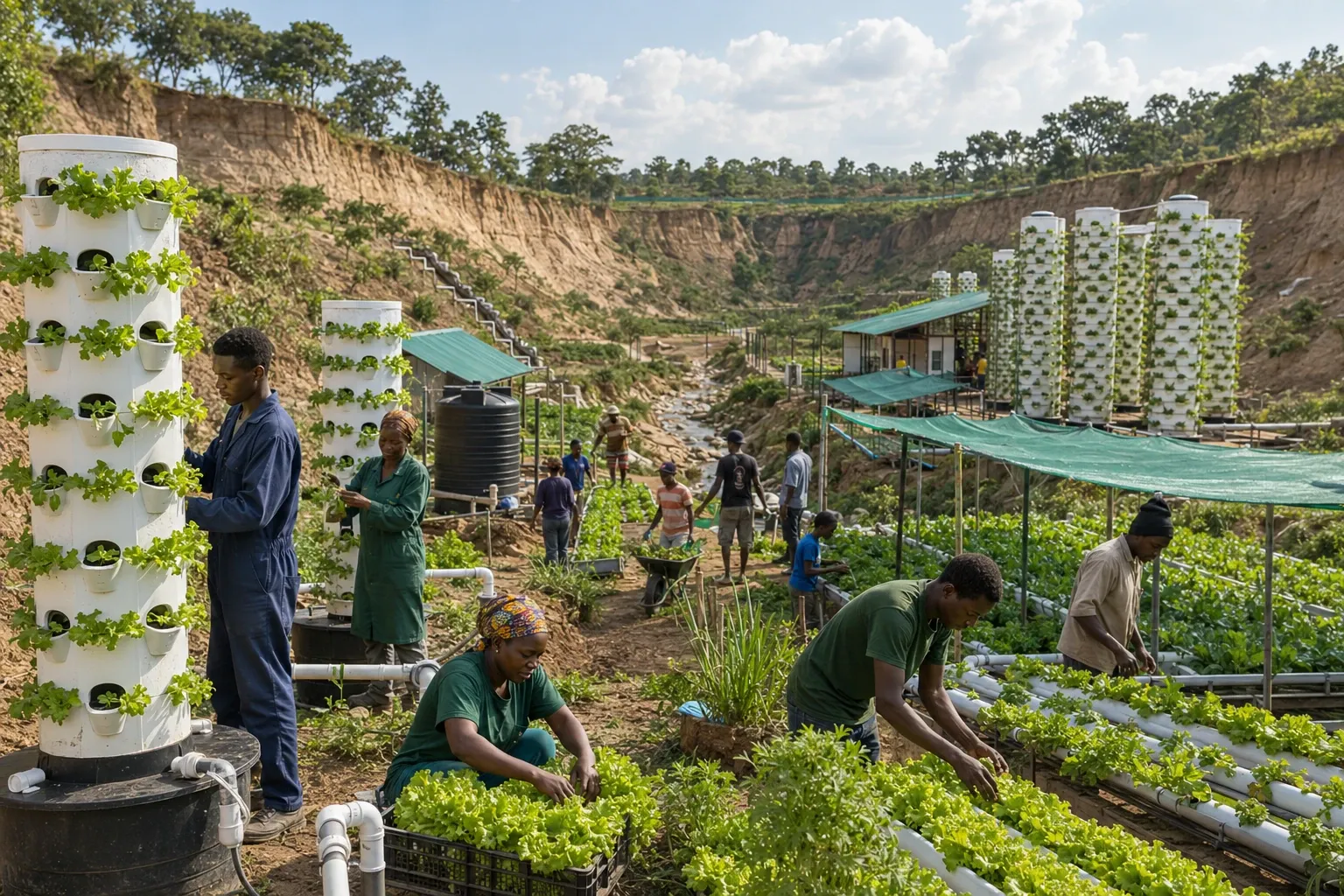
Waiting for damaged soil to heal can take years, and healing it fully may not be possible at all. REALI does not wait. Vertical towers and hydroponic systems grow crops in water and nutrient solution above the ground, so food production does not depend on the condition of the soil beneath it.
This also means the farms can be built on the stable, rocky ground exposed by mining, land that could not otherwise be farmed, while using less space and less water than conventional farming.
How the pilot works
-
Baseline assessment Before anything is built, we carry out a participatory assessment with the community, understanding current food security and confirming the community sees the damaged land as a problem worth solving together.
-
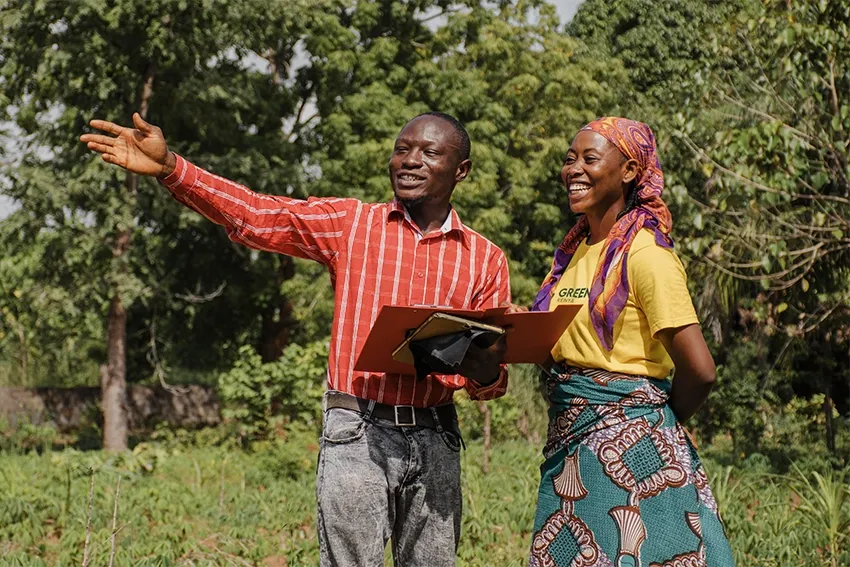
Community onboarding and site selection. We onboard the ten community groups and select sites with environmental and geological experts, so every farm sits on stable, safe ground. Roles and produce-sharing agreements are agreed with each group in advance.
-
Installation. We install the vertical and hydroponic systems, provide the first seeds and nutrients, and set up a water plan for each site.
-
Training and mentorship. Training happens hands-on, during installation and planting, backed by regular mentorship visits and peer learning between groups.
-
Monitoring and documentation. Groups keep simple records of what is planted and harvested. We track what is working, so the model can be refined and, if it succeeds, grown.
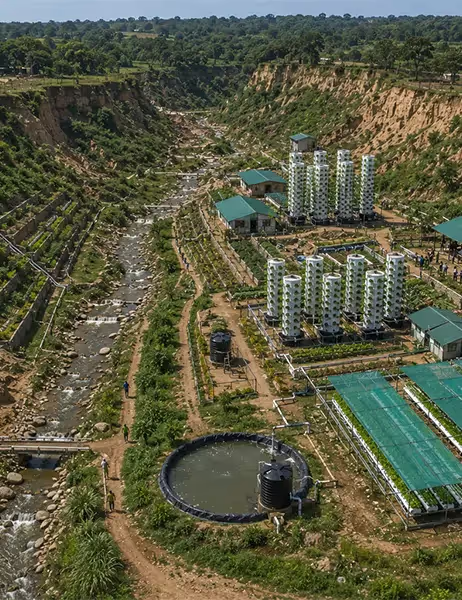
Site Safety
Every site goes through an environmental and geological check before anything is installed, and only stable ground is used.
Nutrient solutions are supplied directly by us, reducing reliance on costly market alternatives. Equipment is fabricated locally where possible, so replacement parts are easy to find. None of this removes every risk of working on previously mined land, but it is why the assessment happens before the farm, not after.
Who owns what
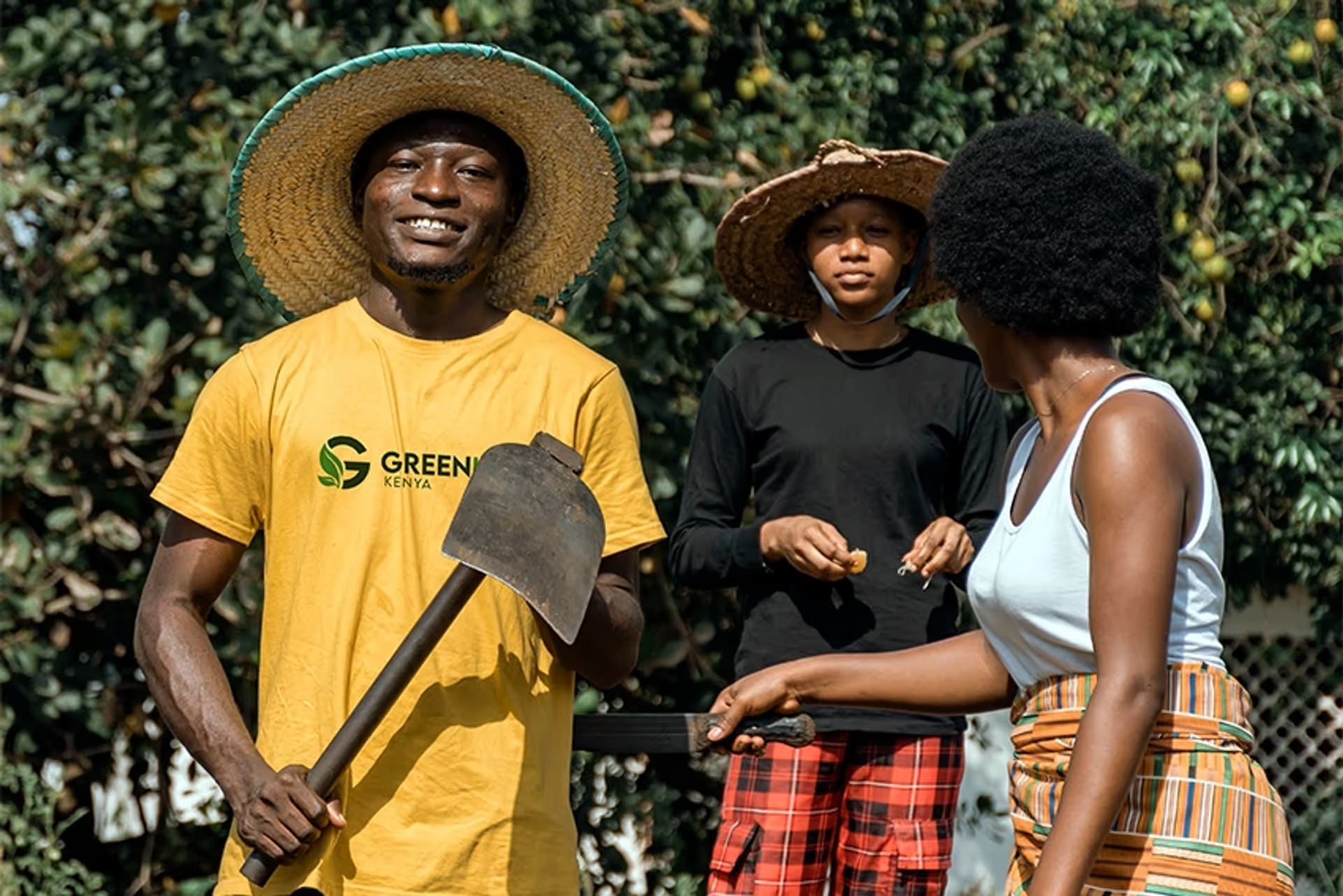
The land and the farms belong to the community groups that run them. Green Leaf Kenya does not buy or own land, before, during, or after the pilot. Our role is to fund the assessment, install the systems, and train the groups, not to hold the asset. What each site produces belongs to the group that grows it.
What this pilot aims to prove
If REALI works as designed, ten community groups will have working farms, practical new skills, and food and income from land that produced neither before.
Just as important, we will have real evidence, what worked, what didn’t, and what it costs; to refine the model and decide whether, and how, to grow it to more sites.

Where things stand
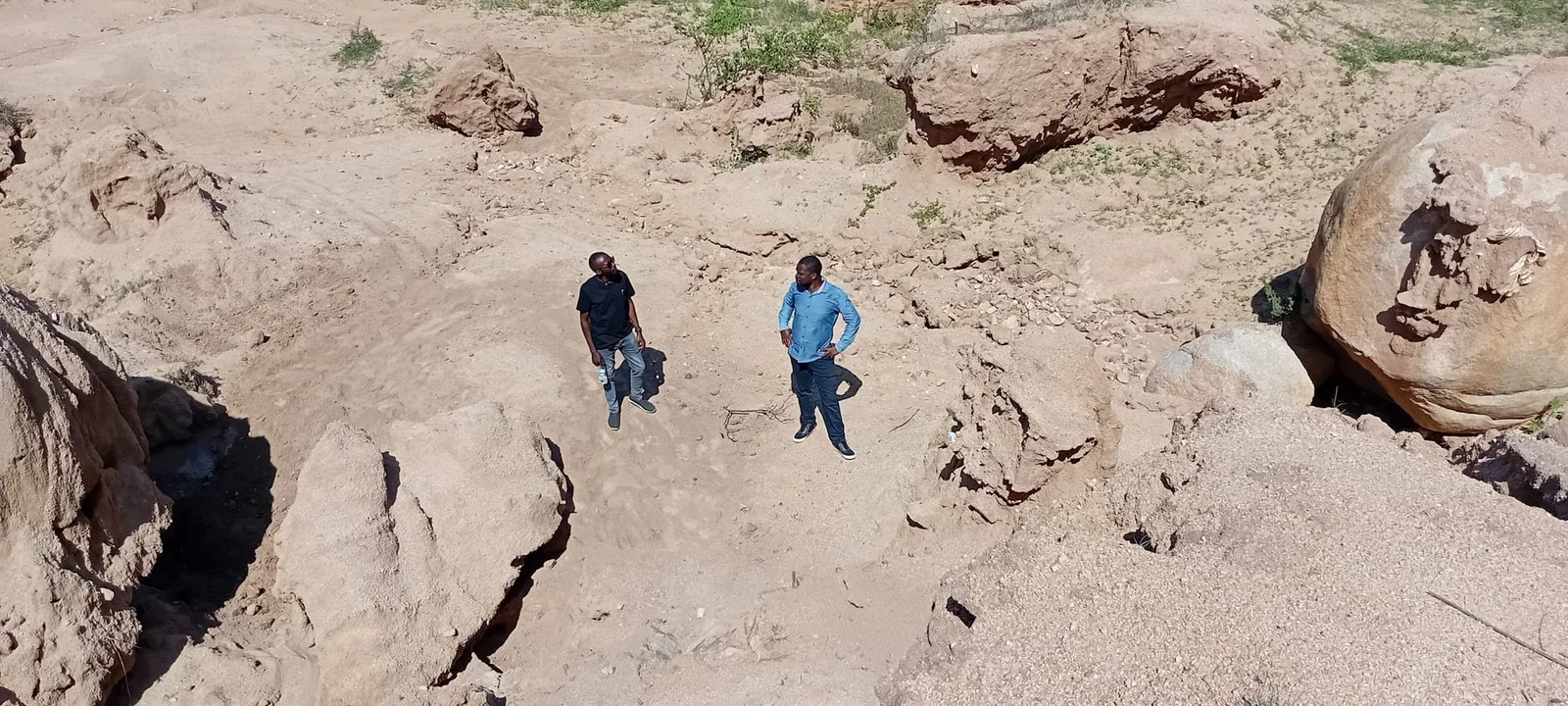
We are raising the funds to launch. The pilot design is in its final stage, sites have been visited, and conversations with community members and local leaders are underway. We publish no start date until it is real, funding sets the pace.
Support the first sites
Your support funds the baseline assessment, the site safety checks, and the first growing systems. The first sites begin as soon as funding allows.