
Safeguarding Policy
Safeguarding Policy
1. Our commitment
Green Leaf Kenya has zero tolerance for abuse, exploitation, harassment, or neglect of any person we work with or alongside. Everyone who comes into contact with our work – children, adults, community members, volunteers, and our own people – has the right to be safe. Safeguarding is not a document to us; it is a condition of everything we do, and it applies before, during, and after any project activity.
2. Who this policy covers
This policy binds everyone acting for or with Green Leaf Kenya: board members, staff, volunteers (local and international), interns, consultants, contractors, partners, and visitors to our activities or sites. Partners and contractors must follow this policy or demonstrate an equivalent standard of their own as a condition of working with us.
3. Definitions
- Safeguarding: protecting people – especially children and adults at risk – from harm arising from contact with our organization, our people, or our activities.
- A child: anyone under 18 years of age, in line with the Constitution of Kenya and the Children Act, 2022.
- An adult at risk: an adult who, because of age, disability, illness, or circumstance, may be less able to protect themselves from harm.
- Harm includes: physical, emotional, or sexual abuse; sexual exploitation and harassment; neglect; bullying; economic exploitation; and any misuse of power, trust, or resources – including requesting anything in exchange for participation in our programs, which is strictly prohibited.
4. Guiding principles
- Do no harm. We assess and reduce risks before any activity, and we stop activities that create risk we cannot manage.
- Best interests first. When interests conflict, the safety of the person at risk comes before the interests of the organization or any individual in it.
- Everyone is heard. Concerns are taken seriously regardless of who raises them or who they concern – including when they concern our own leadership.
- Survivor-centered. People who report harm control what happens with their story to the fullest extent the law allows, and are treated with dignity, belief, and care.
- Confidentiality. Information about concerns is shared only with those who must know to act on them.
- No retaliation. Anyone who raises a concern in good faith is protected. Retaliation is itself a breach of this policy.
5. The context of our work
Our activities include community meetings, site visits, farm installation and training, photography and media work, and – in future – hosting local and international volunteers. Two risks are specific to us and named here deliberately:
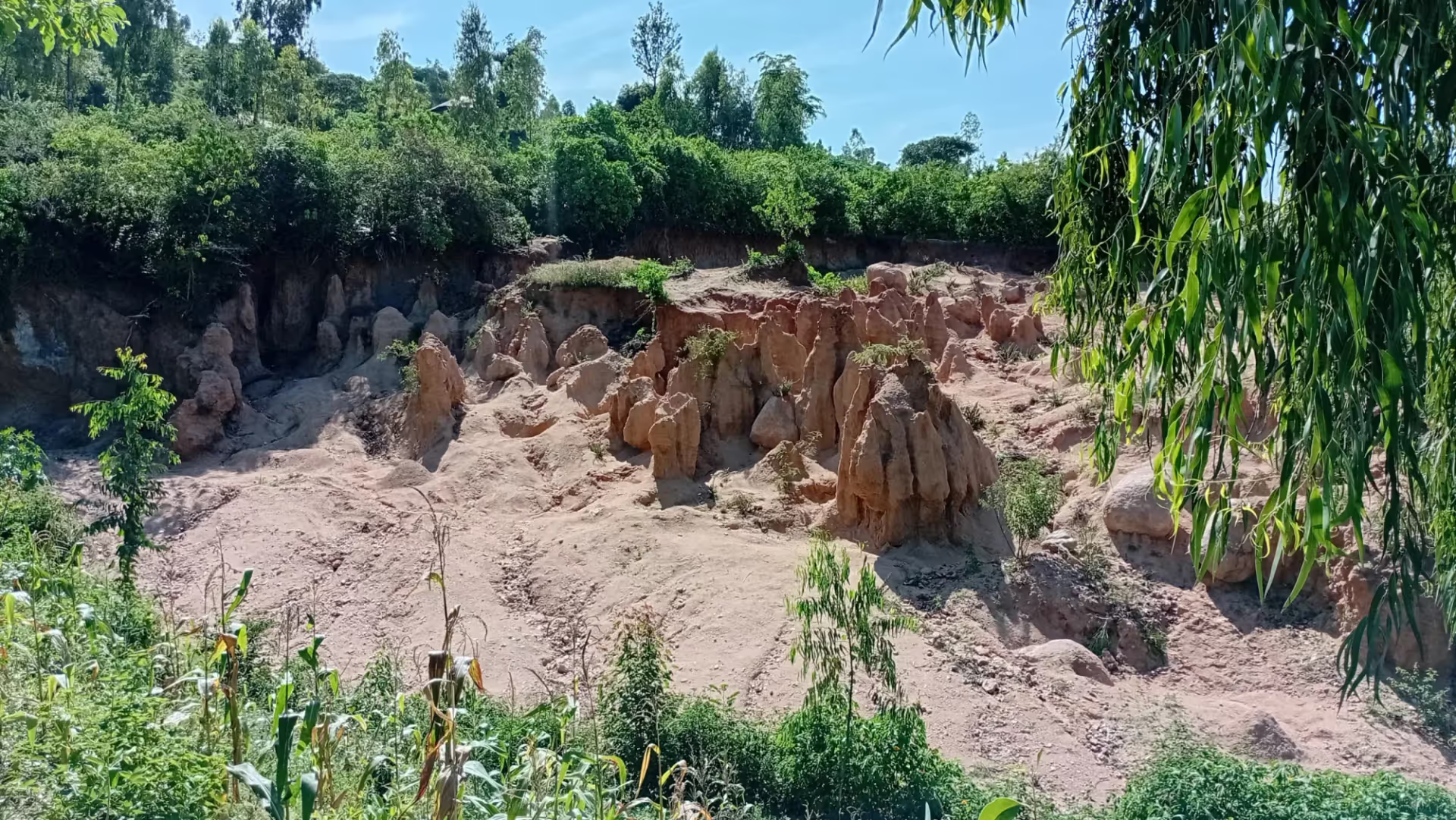
- Physical danger of mined sites. Abandoned sand-mining gullies are hazardous ground. Children must never be brought onto pit floors or unstable edges during our activities; site visits follow the safety assessment for that site; and community events near sites include clear physical boundaries.
- Power and resources. As an organization bringing funding, equipment, and opportunity into a low-income area, our people hold power. No one acting for Green Leaf Kenya may ever request money, favors, labor, or anything else in exchange for inclusion in a program, a job, equipment, or any benefit.
6. Code of conduct
Everyone covered by this policy must:
- Treat every person with dignity and respect, regardless of age, sex, disability, ethnicity, religion, or any other status.
- Never engage in any sexual activity with a child (anyone under 18). Mistaken belief about age is no defense.
- Never engage in sexual relationships with program participants or community members where the relationship involves an abuse of the power our role carries.
- Avoid being alone with a child in program settings; work within sight of others (the “two-adult” practice).
- Never exchange program benefits, employment, or resources for anything.
- Never hit, threaten, humiliate, or verbally abuse anyone in the course of our work.
- Take photographs or video only with informed consent, recorded in the consent log; never photograph children without a parent or guardian’s consent; never publish images that shame, sexualize, or endanger anyone, and never publish information that identifies a child’s home location.
- Never share personal contact with children met through our work, or contact them privately on social media.
- Report every concern (section 8) – reporting is a duty, not an option.
7. Safe recruitment and induction
Before anyone – staff, volunteer, or board member – takes a role involving contact with children or adults at risk, we take reasonable vetting steps proportionate to the role: identity confirmation, at least one reference, and a self-declaration of any relevant criminal history. Every person covered by this policy receives it at induction, signs an acknowledgment, and international volunteers additionally receive an orientation covering this policy, site safety, and local reporting channels before any community contact.
8. How to report a concern
Anyone – inside or outside the organization – can raise a concern.
- Primary channel: concerns@greenleafkenya.org – read only by designated people and handled confidentially.
- In person: to the Designated Safeguarding Officer, Collins Kirowo. If a concern involves the Designated Safeguarding Officer, report to the Board Chair.
- You do not need proof. A worry is enough. Do not investigate yourself; report and let the designated people act.
- Emergencies and crimes: where someone is in immediate danger or a crime may have been committed, safety and legal reporting come first – the police, the Directorate of Children’s Services for child cases, and national helplines: Childline Kenya 116 (children) and GBV helpline 1195. Our own process supports and never replaces legal reporting.
What happens next: the Designated Safeguarding Officer acknowledges the report as quickly as possible and within 48 hours; ensures any immediate safety needs are addressed; records the concern securely; and determines next steps – which may include internal review, referral to authorities, and support for the person affected. The person who reported is told, within the limits of confidentiality, that action was taken.
9. Breaches
A breach of this policy leads to consequences proportionate to its seriousness: retraining, supervision changes, suspension, dismissal or termination of contract or volunteer arrangement, ending of partnership, and referral to authorities where the law may have been broken. Concealing or ignoring a concern is itself a breach.
10. Digital safeguarding
The code of conduct applies online exactly as it does in person. Our channels never publish content that identifies, shames, or endangers children or adults at risk; consent rules apply to all imagery regardless of platform; and organizational accounts are used for organizational communication only.
11. Governance
The Board owns this policy. The Designated Safeguarding Officer reports on safeguarding to the Board at least twice a year, including a record of concerns raised and how they were resolved (anonymized as appropriate). The policy is reviewed every two years, or immediately after any serious incident, and is published on our website.
Everyone who works or volunteers with Green Leaf Kenya signs this policy at induction.
12. Contact
Green Leaf KenyaKabondo, Rachuonyo East, Homa Bay County
P.O. Box 79 – 40223, Kadongo
hello@greenleafkenya.org (general)
concerns@greenleafkenya.org (data protection, legal & compliance)
Phone: +254 705 22 77 19