Our Work
We help communities turn mined-out land into working farms.
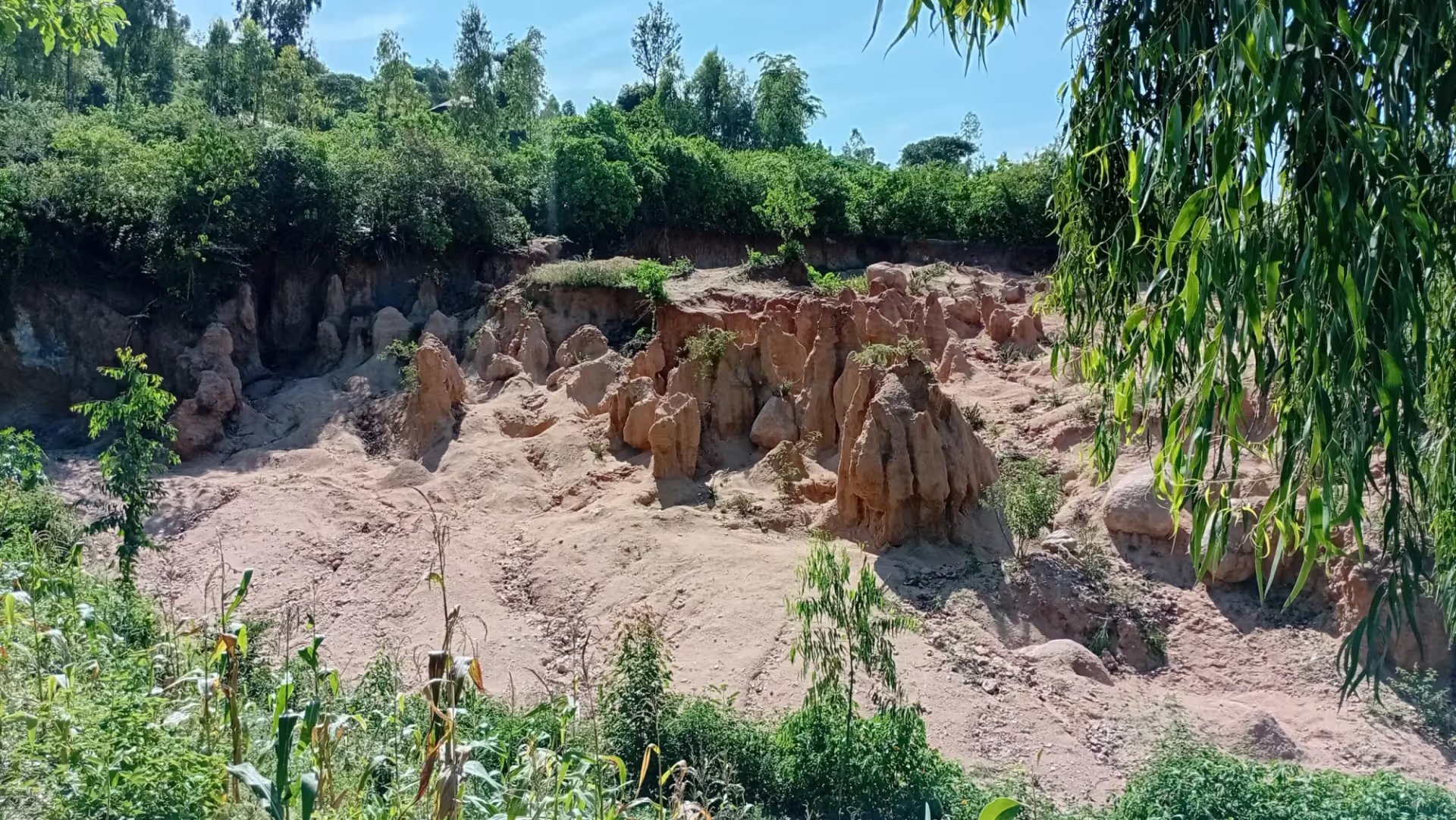
In Kabondo, Rachuonyo East, sand mining has left families with damaged land, eroded roads, shrinking farms, and too little lasting value from land that once supported daily life. Green Leaf Kenya works with local community groups to change that story.
The idea behind everything we do
Professionally secured sand-mined areas can become community-owned productive assets, land that brings food production back, builds skills, creates income pathways, keeps more value in the community, and reduces dependence on destructive mining. Everything we do exists to prove that idea, one site at a time.
Who brings what...
Green Leaf Kenya brings the structure.
The baseline assessment, professional site checks, farming systems, training, coordination, funding, and honest documentation of what works.
The community brings the ground truth.
The land, the local knowledge, the labor, the decisions, the ownership, and the continuity that outlasts any project.
When the community owns the land and the farms, the work can last beyond any project. That is the model.
How change happens, in seven steps...
-
The community names the problem. A participatory baseline confirms the need before anything is built.
-
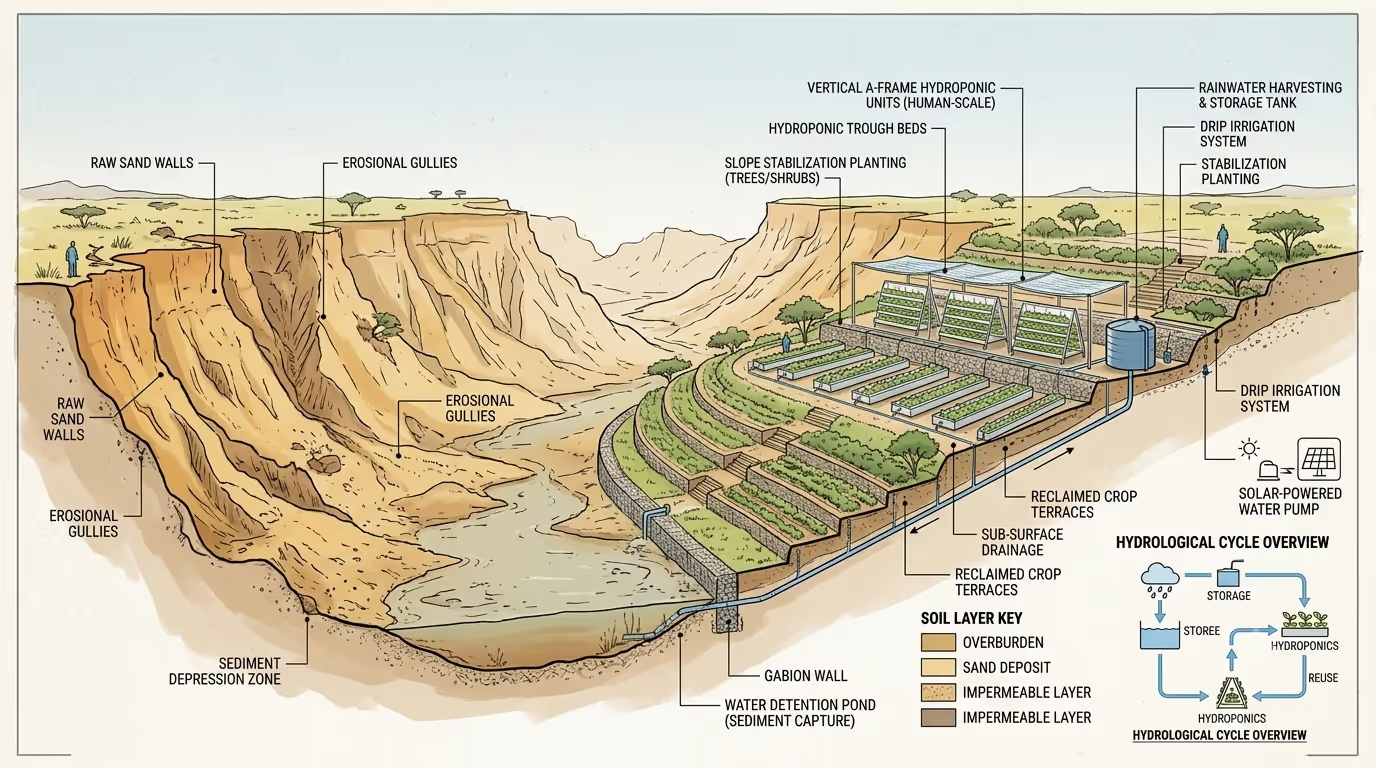
Professionals assess where recovery can begin. Safety, stability, water, and access come before any work.
-
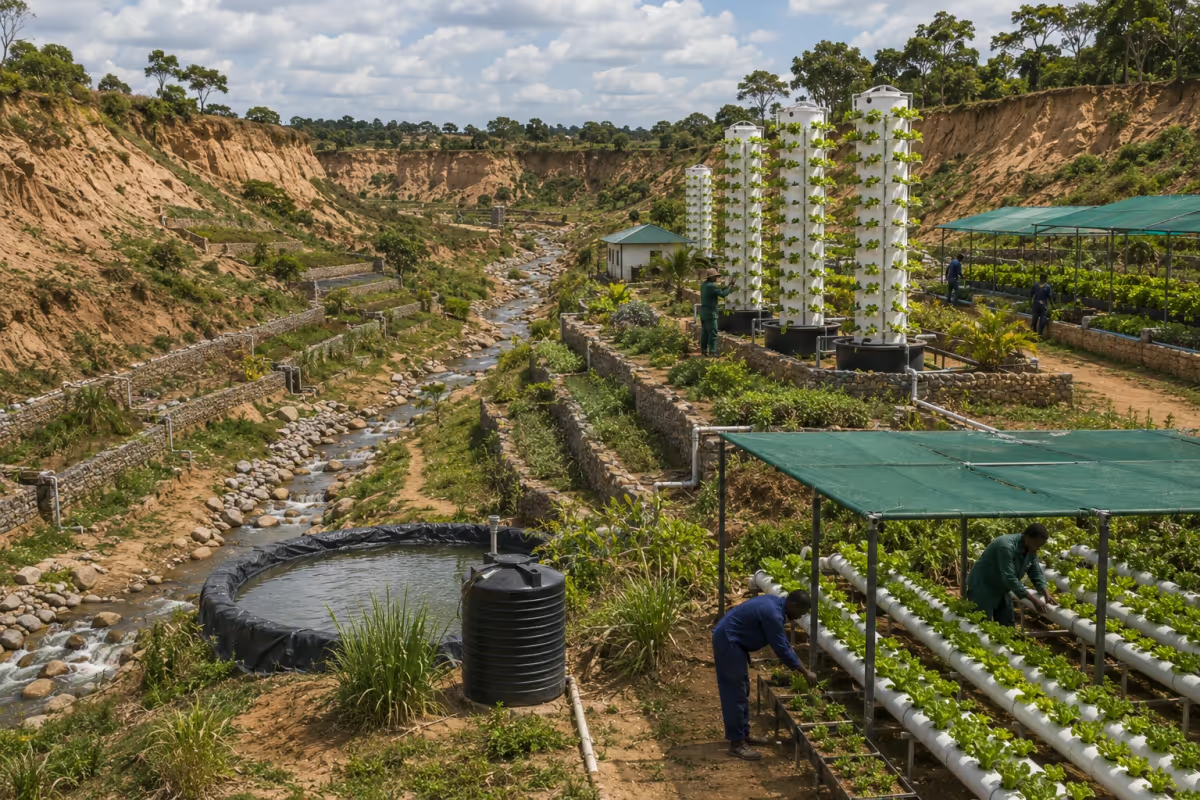
The first systems are installed. Vertical and hydroponic farms grow food above the damaged soil.
-
Groups learn by doing. Training happens during setup, planting, and harvest, with mentorship after.
-
Food production becomes the alternative. Harvests supply households and open early income from sales.
-
Groups build ownership. They manage produce, keep records, and grow toward enterprise together.
-
Evidence guides what happens next. We document what works and refine the model before growing it.
REALI:
The First Proof
Our first pilot – REALI, the Resilient Ecosystems and Agricultural Livelihoods Initiative – is designed for 10 community groups and 10 demonstration farms over six months.
It exists to answer one question honestly: can a professionally guided, community-owned model turn abandoned sand-mined land into working farms that improve food access, build skills, and create early income?
We are raising funds to launch.
What we work toward
Our five strategic priorities, and the Sustainable Development Goals they advance:
-
Hunger relief & food security (SDG 2). Helping families grow and access reliable food close to home.
-
Climate-smart land recovery (SDG 13, 15). Growing food on damaged land with systems fit for the climate.
-
Inclusive, community-led action (SDG 5, 10). Keeping decisions, assets, and learning in community hands.
-
Sustainable local livelihoods (SDG 1, 8). Turning production into income, skills, and local enterprise.
-
Institutional growth & partners (SDG 17). Building a credible organization partners can trust and join.
Help prove it works
The model is designed, the community is ready, and the first sites are waiting on funding. Your support starts the proof.